Cairo · Remote-EU
Sayed
Elmohamady
I design the systems behind the products people use every day.
Great products don’t feel designed.
They feel decided.
Every screen is the answer to a question
someone made the time to ask.
Eight years across fintech, hospitality, and the creator economy have taught me that the leverage in a product isn’t in the pixels — it’s in the clarity of the decisions behind them.
A senior body of work.
† Aggregate MAU across Brandbassador, MNT-Halan, and Mabaat at the time of work — placeholder to validate.
From shipping screens
to shipping systems.






Three lanes. One craft.
Design is a verb here, not a title.
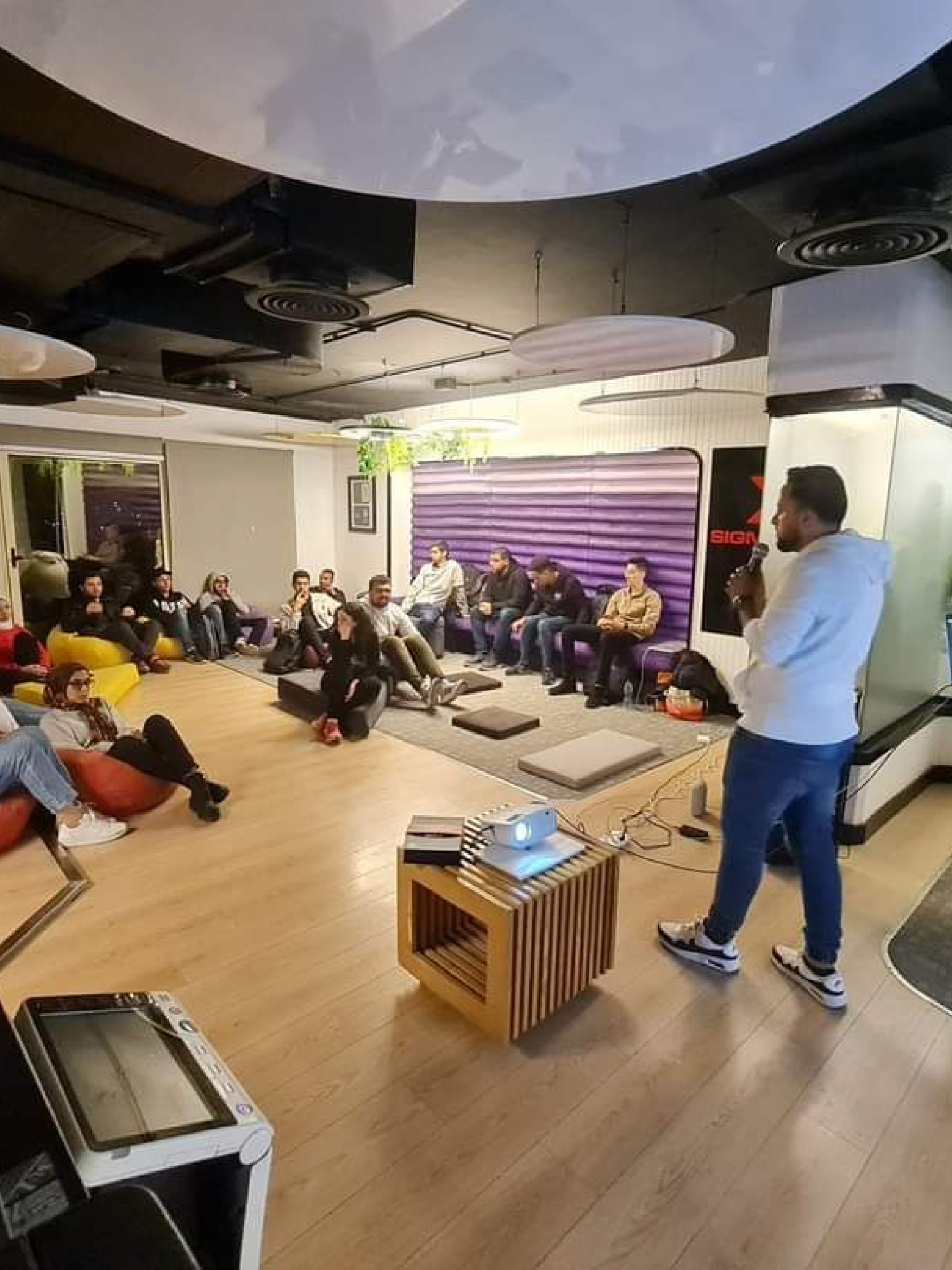
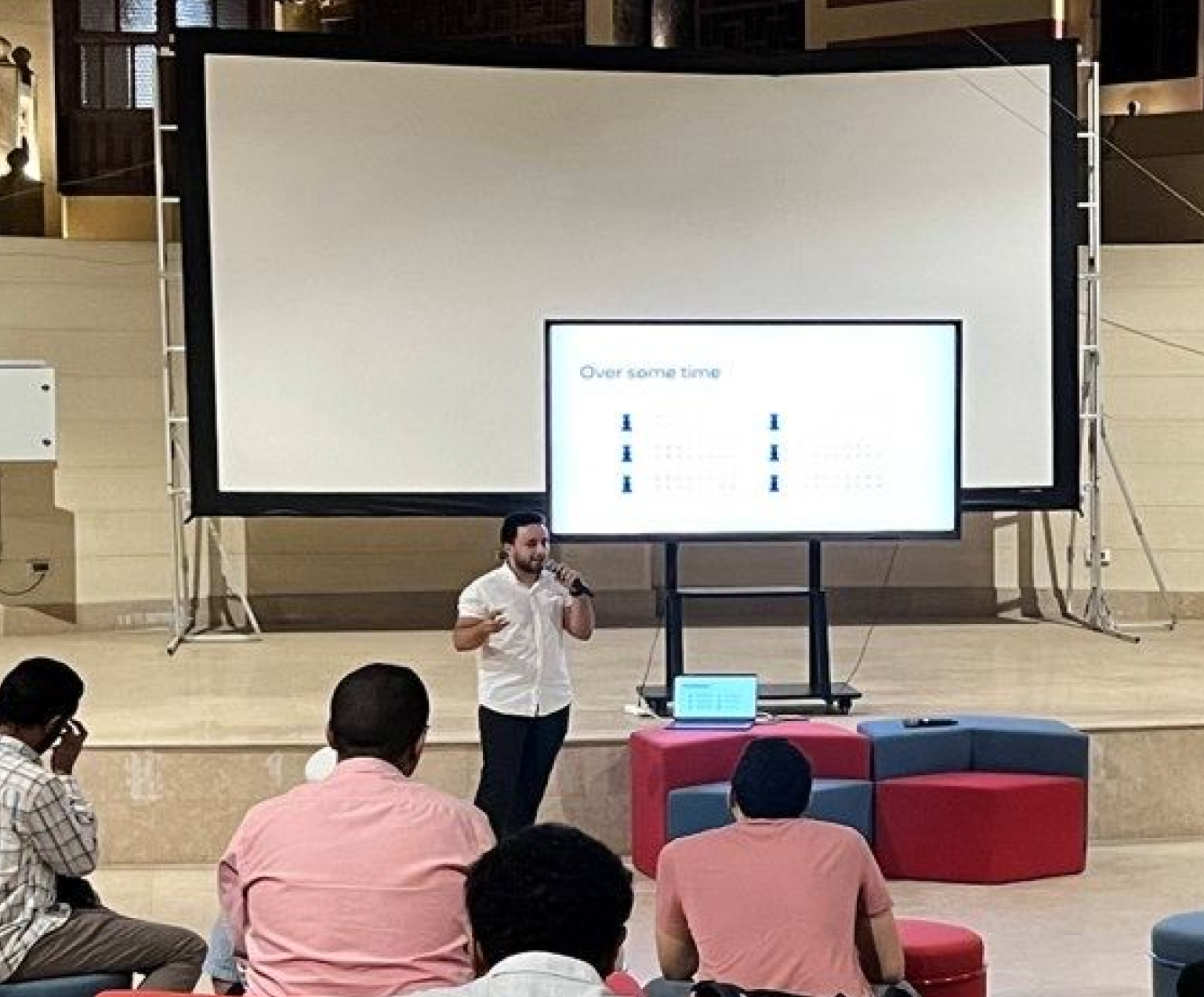
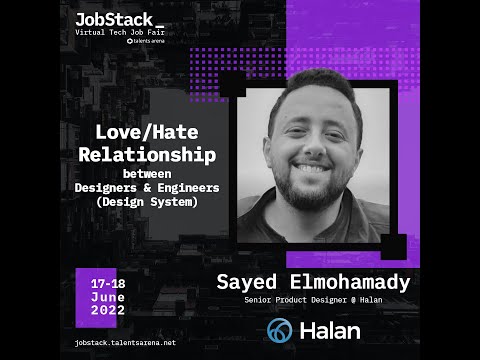
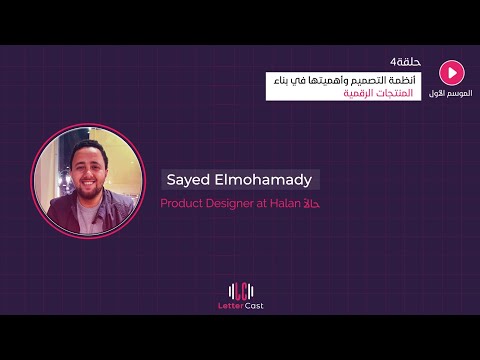
Cairo-based, globally-shipping. I split my week between deep work at the desk, the kind of design critiques that happen on a beanbag, and the occasional stage in front of a hundred engineers — explaining why design systems matter.
Design decisions, measured in business outcomes.
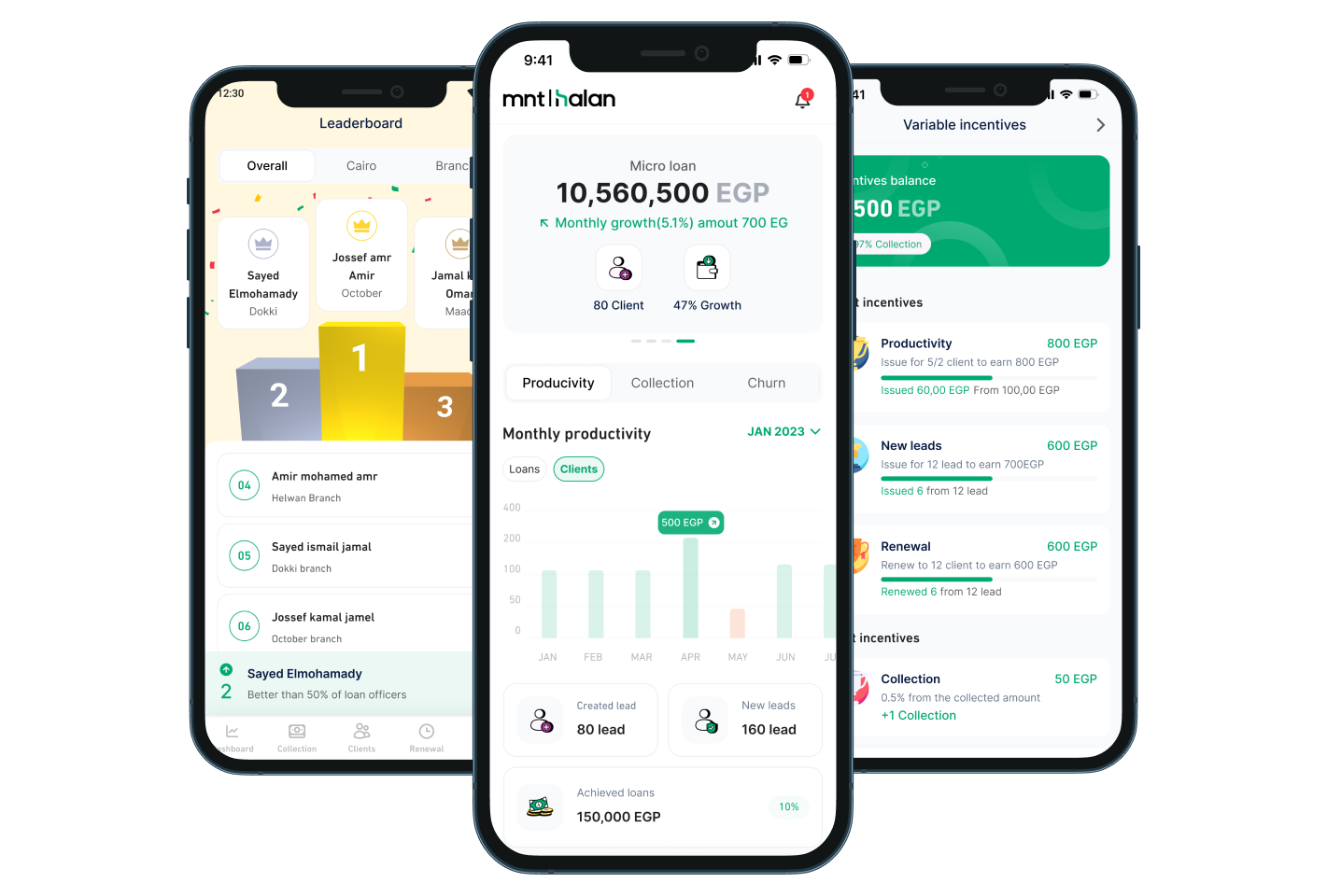
At Halan, loan onboarding wasn’t a UX problem — it was a revenue leak. Every dropped applicant was a loan we didn’t book. I rebuilt the flow around officers in the field, not designers at a desk, and watched the funnel close.
Brandbassador was shipping screens twice — once in React, once in Flutter — paying the cost in eng hours, QA bugs, and brand drift. One source of truth across platforms turned design from a bottleneck into a multiplier.
Mabaat’s booking page was beautiful — and converting poorly. Guests in the GCC trusted host identity, not star ratings. Reframing trust signals lifted bookings without touching the funnel underneath.
† Internal analytics at time of work; figures rounded. Available on request under NDA.
An ambassador app that earns the open.
Ambassadors open the Club app to do one thing: see what they can earn next. I redesigned the mobile experience around mission discovery, wallet clarity, and rewards that feel real.
- Mission cards prioritized by relevance and earning potential.
- Wallet view that surfaces value, not just balance.
- Onboarding that gets a creator to their first mission in < 60s.
- Notifications tuned for retention, not noise.
A gamification system, not a badge.
Loyalty programs fail when they reward activity instead of progress. I designed Club Levels as a system — tiers, thresholds, perks, and feedback loops that make ambassadors feel themselves moving.
- Level architecture mapped to actual ambassador behavior.
- Near-threshold nudges that surface progress, not pressure.
- Tier-specific perks tied to brand value, not vanity rewards.
- Motion-led level-up moments — celebration as retention.
Loan officers in the field.
Field officers using mid-tier Android phones, in 38°C heat, in villages with patchy data, paid on commission. I designed the product for the user nobody designs for.
- Moved photo upload off the happy path — async background sync.
- Rebuilt the application flow around offline-first state machines.
- Designed an incentives dashboard officers could read at a glance, on the move.
- Result: completion rate ↑ ~22%, support tickets ↓†.
Clarity from browse to checkout.
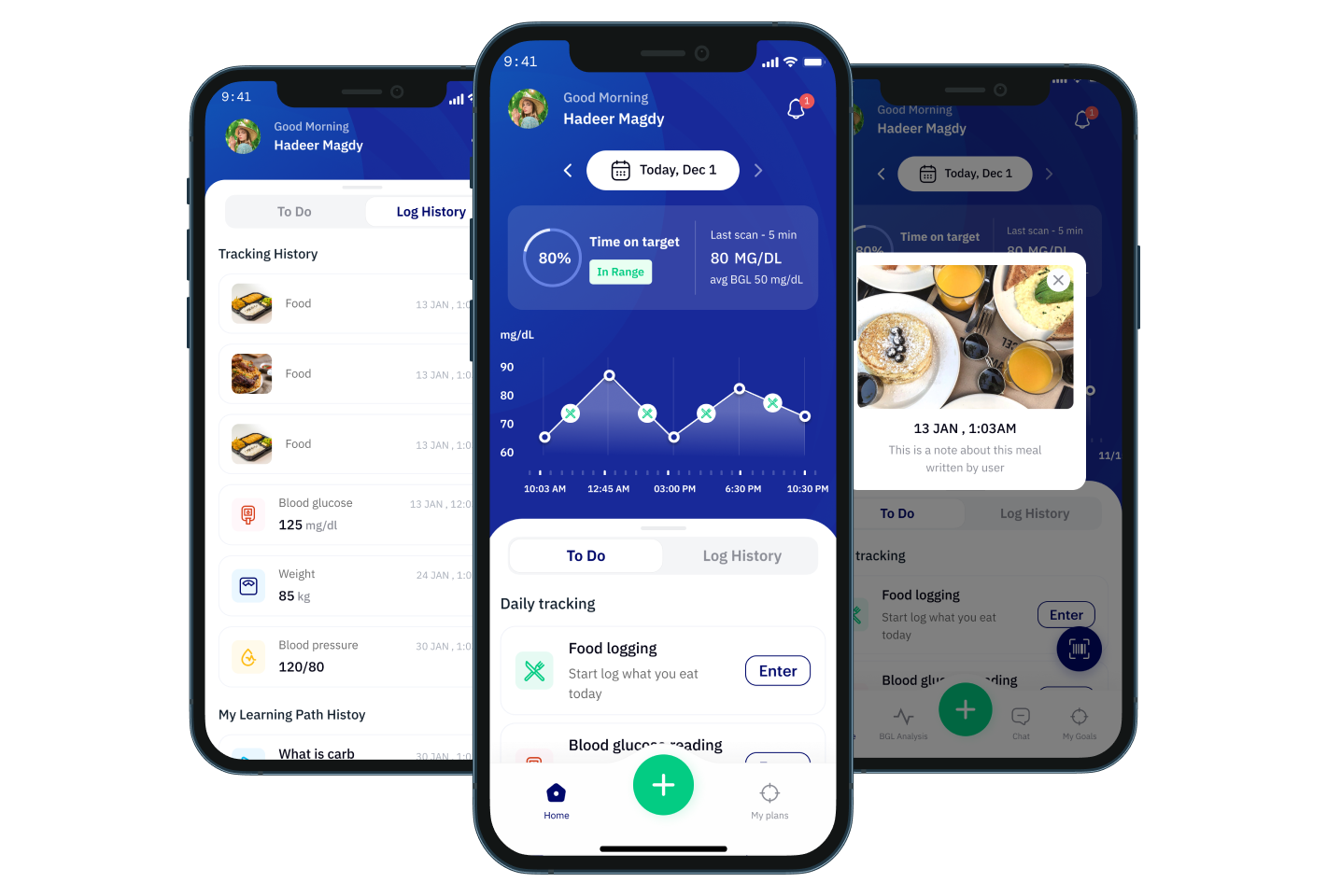
Health products live or die on trust. I rebuilt Otida’s tracking and prescription flows around research-validated UX patterns — patients understand their plan, doctors trust the data.
- Logging redesigned around the moments users actually do it.
- Glucose & blood-pressure data surfaced as decisions, not numbers.
- Prescription creation reduced from multi-screen to single flow.
- Validated with patients and clinicians before shipping.
Short stays, lasting first impressions.
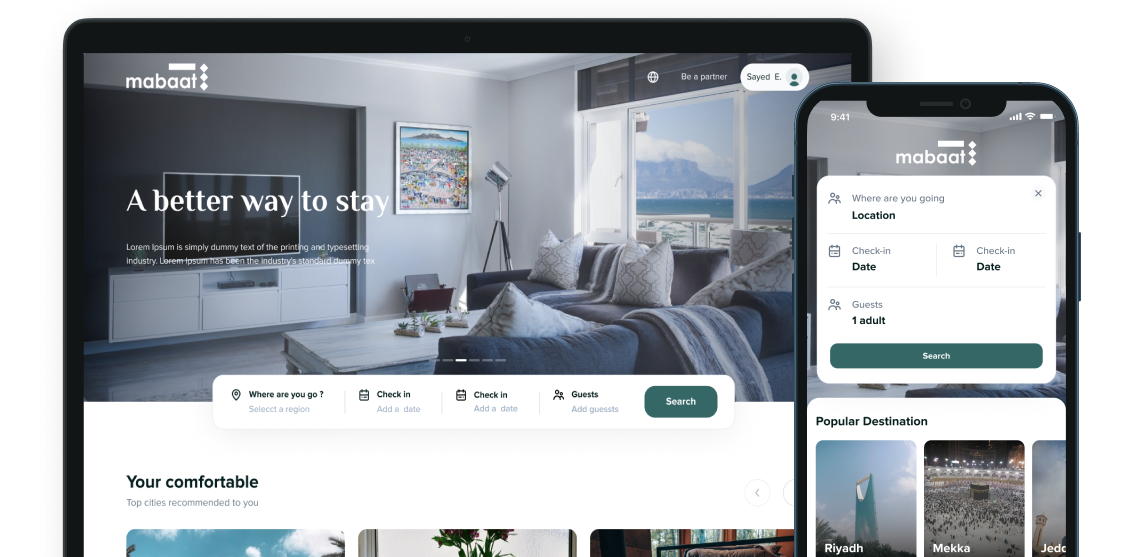
Western booking patterns don’t translate. MENA users want host identity, not host ratings. I designed Mabaat’s booking product around trust signals tuned to the region.
- Verified-host identity surfaced earlier than rating stars.
- Transparent price breakdown — no surprises at checkout.
- 24/7 support built into the flow, not buried in a help center.
- Cultural cues in iconography, copy, and onboarding tone.
Club TIE.
One product, two platforms, zero shared language. I built the design system that gave Club a single source of truth — across a React web app and a Flutter mobile app.
- Audited 14+ button variants and 6 modal styles across two codebases.
- Built a 4-tier token architecture from primitives to semantic roles.
- Shipped contribution & governance flow — designers PR changes, engineers review.
- Documented in Figma + Notion + Storybook. One language, three surfaces.
The system bought us velocity.
A system for the Arab web.
RTL-first, dual-script, web and mobile. I’m building Etar because the Arabic-speaking web deserves a design system built for it — not retrofitted from one that wasn’t.
- 4,000+ components across web and mobile, RTL & LTR.
- Native Arabic typography pairings, not Latin-first fallbacks.
- Tokens designed to flip direction without breaking rhythm.
- Built as a product, sold as a system — my bet on the MENA market.
Four modes. One product brain.
I don’t follow a methodology — I switch between four modes, picking whichever one is going to move the product the most that week.
Sitting in eng standups twice a week. Reading the codebase. Filing my own Linear tickets. I work as part of the product team, not adjacent to it.
Auditing what already exists, mapping the contract between Figma and code, and writing the rules so the next 100 screens compose themselves instead of needing a designer.
Some questions only get answered in code — motion, density, real data, real performance. I prototype in Cursor / Claude Code / v0 so design happens in the medium that actually ships.
Talks, podcasts, design critiques, 1:1s. The work isn’t done when it ships — it’s done when the rest of the team can ship it without me.
The thread that runs through all four: I treat design as a product, not a deliverable. I want what I make to keep working after I’ve moved on — and to make the people who inherit it faster than I was.
Open to senior IC, staff,
and DS Lead roles.
London · Berlin · Remote-EU · NYC. Consumer products where design systems unlock product velocity.
Thank.
you.
For your time, your attention, and the chance to share the work.